

Accused of marriage fraud by USCIS? This is one of the most serious findings in immigration law.
An INA § 204(c) finding can permanently block every future green card petition, no matter who you marry next. There is no statutory waiver. No expiration. No second chance through the family immigration system unless the finding is challenged. Here is what most people do not realize: some of these findings are based on thin or misinterpreted evidence, and they can be attacked.
These cases are serious. They are not always final.
Got a § 204(c) finding, NOID, or did USCIS come to your home? Call us. We will tell you if reopening is realistic.
Reviewed by Hon. Raisa Cohen (Ret.). Retired U.S. Immigration Judge. Former DHS/ICE Assistant Chief Counsel. New York Immigration Attorney.
You may already have a § 204(c) problem if any of this applies

A prior I-130 was denied with language about the marriage being not bona fide, fraudulent, or sham.
You received a Notice of Intent to Deny (NOID) referencing fraud or sham marriage.
A separate spousal interview (Stokes) went poorly and you have not heard back.
USCIS came to your home or workplace asking questions about the marriage.
A previous spouse made statements to USCIS about the marriage that hurt the case.
Your prior file shows multiple marriages with timing irregularities.
Most people do not find out about § 204(c) until they file again, and the new petition is denied. By then, time, money, and options are already lost. Do not file anything new until you understand your record.
Have any of the above? Do not file anything new yet. Book a Strategy Consultation. (718) 275-1234
What if my marriage was real, but USCIS thinks it was fraud?
Short answer: This is more common than people realize. Many § 204(c) cases involve real marriages that ended in divorce, couples who performed poorly at a separate spousal interview (Stokes), inconsistent or incomplete documentation, or statements by one spouse that hurt the case. USCIS may interpret these issues as fraud even when the relationship was genuine. The issue is not always what happened. The issue is what the record shows. And records can be challenged.
Real marriages get misread as fraud when:
The marriage ended in divorce, and the divorce timing or paperwork looks worse than the underlying relationship.
One or both spouses gave inconsistent answers in a Stokes interview because of nerves, language barriers, or genuine memory differences.
Documentation is thin because the couple kept finances separate, lived between two homes, or did not formalize joint accounts the way USCIS expects.
A previous spouse made angry or vindictive statements after the relationship ended that USCIS treats as evidence of fraud.
A USCIS officer’s site report uses language (‘the home appeared not lived in by both spouses’) that does not match what the officer actually documented seeing.
Tax filings as ‘single’ during the marriage were the result of bad accounting advice, not an admission of separation.
If your marriage was real, the path forward is showing what is actually in the record. The standard from Matter of P. Singh requires USCIS to establish that fraud is ‘more than probably true.’ That standard is not met by suspicion or by ambiguous documentation. Honest evidence, documented well, is how these cases get won.
If your marriage was real and you are facing fraud accusations, send us the file. (718) 275-1234
What is a fraudulent marriage, and what is not?
Short answer: A fraudulent marriage under INA § 204(c) is one entered into for the purpose of evading immigration laws. The Ninth Circuit’s foundational definition in Bark v. INS, 522 F.2d 1200 (9th Cir. 1975), holds that a sham marriage is one the parties did not enter into to establish a life together but rather to circumvent immigration laws.
The intent at the time of the marriage controls. A marriage that started in good faith and later failed is not a sham marriage.
A fraudulent marriage is
A marriage entered into for the purpose of obtaining an immigration benefit.
A marriage where the parties did not intend, at the time of marriage, to establish a life together.
A marriage where the parties agreed to enter the marriage solely for immigration purposes (and, under Matter of R.I. Ortega, took an overt act in furtherance of that agreement).
A fraudulent marriage is NOT
A marriage that started in good faith and later failed.
A marriage that ended in divorce.
A relationship where the couple argued, separated, or had problems.
A case with imperfect documentation.
A case where the spouses had different memories or got dates wrong at the interview.
A case where one spouse later made unfavorable statements out of anger or to gain leverage in a divorce.
USCIS does not require perfection. The agency does require credible evidence. The line between a failed marriage and a fraudulent marriage is the intent at the time the marriage was entered, not how the relationship turned out years later.
Worried USCIS will misread your real marriage? Talk to us before they do. Book a consultation.
What is the INA § 204(c) marriage fraud bar?
INA § 204(c): A federal statute (8 U.S.C. § 1154(c)) that bars USCIS from approving any future immigrant petition (most notably Form I-130) on behalf of a person who has previously entered into, attempted to enter into, or conspired to enter into a marriage for the purpose of evading immigration laws. The bar is triggered by a USCIS finding based on substantial and probative evidence. A criminal conviction is not required.
Once § 204(c) attaches to a person, it follows them for life. Every U.S. citizen or LPR who later petitions for that person, in any new family relationship, is denied. There is no statutory waiver. The bar is treated as permanent on paper.
USCIS decisions in these cases are highly discretionary and fact-specific. The agency must articulate a specific evidentiary basis for the finding. When that articulation is thin, conclusory, or unsupported, the finding can sometimes be reopened.
How does USCIS find marriage fraud under § 204(c)?
Short answer: USCIS applies the ‘substantial and probative evidence’ standard. The Board of Immigration Appeals clarified this standard in Matter of P. Singh, 27 I&N Dec. 598 (BIA 2019), which held that to be substantial and probative, the evidence must establish that it is ‘more than probably true’ that the marriage is fraudulent. The standard is more than preponderance and less than clear-and-convincing. USCIS bears the burden once derogatory evidence is in the record.
Officers look at the totality of the record. The BIA in P. Singh listed factors USCIS may rely on: deliberate attempts to deceive immigration officials regarding cohabitation or joint finances; detailed reports from on-site visits and field investigations; evidence of other romantic partners; statements from family, employers, or acquaintances; tax filings as ‘single’ during the marriage; and patterns of multiple marriages by the petitioner.
Important rule from P. Singh: where there is evidence of fraud in the record, affidavits alone generally are not enough to overcome it. Documentary corroboration is required.
Recent BIA case law that controls these cases
Matter of P. Singh, 27 I&N Dec. 598 (BIA 2019). Establishes the substantial-and-probative-evidence standard and the burden-shifting analysis.
Matter of Pak, 28 I&N Dec. 113 (BIA 2020). § 204(c) bar can apply even where the prior denial referenced only insufficient evidence without a formal fraud finding. No temporal limitation.
Matter of R.I. Ortega, 28 I&N Dec. 9 (BIA 2020). § 204(c) can apply to a K-1 fiancé(e) petition, including where the marriage never took place. The ‘conspiracy’ prong requires both an agreement and an overt act.
Matter of Mensah, 28 I&N Dec. 288 (BIA 2021). An Immigration Judge can find a noncitizen inadmissible for fraud independent of any formal § 204(c) determination by USCIS.
Bark v. INS, 522 F.2d 1200 (9th Cir. 1975). Foundational definition: a sham marriage is one the parties did not enter into to establish a life together but rather to circumvent immigration laws.
USCIS does not need to prove the prior marriage was a sham beyond a reasonable doubt. The agency does need to articulate the evidentiary basis with specificity and afford procedural protections. A vague or conclusory § 204(c) determination can be challenged on that ground alone.
How USCIS investigates marriage fraud (and what to do if USCIS comes to your home)

Short answer: USCIS uses several investigation tools to build § 204(c) cases. The agency reviews documents, interviews each spouse separately, sends officers to your home or workplace unannounced, talks to neighbors and acquaintances, and reviews social media. The investigation results become part of the record. The Board of Immigration Appeals treats reports from on-site visits and field investigations as legitimate evidence in Matter of P. Singh and successor cases.
USCIS came to my home. What is happening?
Short answer: USCIS sometimes sends officers, often from the Fraud Detection and National Security Directorate (FDNS), to the home address on your I-130 to verify that you and your spouse actually live there. The officer may arrive unannounced. The officer may ask to look at the home, observe sleeping arrangements and shared belongings, ask whether both spouses live there, and try to interview either spouse alone. The officer may also speak with neighbors, the building superintendent, or other people in the building.
What to do if a USCIS officer shows up at your door
Ask to see identification. Take a clear photo if you can.
You can decline to consent to a search of your home. USCIS officers generally do not have warrant authority for residential entry without consent.
You can decline to be interviewed in the moment, especially without your attorney present. Politely tell the officer you would like to speak with your attorney before answering questions.
Be polite. Do not argue. Do not lie. Saying ‘I would like to consult my attorney’ is not an admission and is not held against you in this context.
Call us the same day. What you say or do at the door can be the difference between approval and a § 204(c) finding.
Other investigation tools USCIS uses
Document review: tax returns, bank statements, insurance, lease, utility bills. The officer compares names, addresses, dates, and signatures across the record.
Separate spousal interview (Stokes). Each spouse is questioned separately and the answers are compared. See our marriage interview / Stokes page for full preparation.
Workplace visits. Officers may go to either spouse’s workplace and ask coworkers about the relationship.
Social media review. Public posts, photos, comments, and friend lists are sometimes pulled into the file.
Statements from third parties: family members, friends, neighbors, prior partners. Per P. Singh, third-party statements that the marriage is a sham are weighted heavily.
If USCIS has already conducted an investigation and now you have received a NOID or a denial, the report is in your file. We pull the FOIA, examine what USCIS actually documented (versus what the agency concluded), and determine whether the evidentiary basis for the finding holds up under the P. Singh standard.
USCIS came to your home, called your job, or sent a NOID? Call us this week. (718) 275-1234
What makes a § 204(c) case potentially winnable
Short answer: Not every § 204(c) finding can be challenged successfully. The cases we evaluate as potentially winnable share certain features in the original record: the prior denial relied on thin or conclusory evidence, the procedural protections were not honored, the original officer applied the wrong legal standard, or new evidence has come to light that undermines the original conclusion. If your case has any of these features, the consultation is worth it.
Features of a § 204(c) case worth evaluating
The prior denial language is conclusory: phrases like ‘evidence suggests’ or ‘the marriage appears to lack’ without concrete documentary citations.
The original record consists primarily of one officer’s interview impressions, with little independent corroboration.
On-site visit findings were ambiguous or limited (the officer was not let in, the couple was not home, neighbors gave non-specific answers, the report records observation but no admissions).
The procedural protections under Stokes were not honored (no written notice, sexually intimate questions, no opportunity to address inconsistencies).
The original USCIS officer applied a higher evidentiary standard than substantial and probative requires.
New evidence is now available: a child born to the couple, joint financial records produced after the original filing, country-of-origin records, prior counsel’s failure to submit available evidence.
The petitioner who filed the prior I-130 (where § 204(c) was found) has since recanted the fraud allegation in a credible declaration.
Prior counsel was ineffective and Lozada compliance is achievable.
If any of these signals apply to your prior file, send us the denial language and the supporting record. We will tell you in the consultation whether reopening is realistic.
Think your § 204(c) finding might be challengeable? Send us the prior denial. (718) 275-1234
What makes a § 204(c) case very hard to win
Short answer: We are honest with prospective clients. Some § 204(c) cases are hard to reopen no matter how much money is spent. The cases that are very difficult to overturn share certain features in the prior record: a documented admission of fraud, multiple prior fraud findings against the same beneficiary, falsified documents in the prior filing, or strong direct evidence (such as cooperating witnesses or contemporaneous communications) that the marriage was entered for immigration purposes. We will tell you that in the consultation.
Features that make a Marriage Fraud case very difficult
A prior signed admission of marriage fraud by either spouse, in the prior interview transcript or written statement.
Multiple prior § 204(c) findings, or § 204(c) findings against the same beneficiary across multiple petitioners.
Documentary evidence of fraud: backdated leases, fabricated photos, falsified financial records that were authenticated.
Strong witness statements from people inside the relationship that contradicted the bona-fide claim.
A pattern (the petitioner has filed for multiple foreign-born spouses, or the beneficiary has had multiple marriages with documented timing irregularities).
We do not take cases we cannot win. The consultation is the diagnostic. If your case is in this category, we will say so. You will not be sold a path that does not exist.
Want an honest evaluation? Book a consultation. We will tell you if it is worth pursuing.
What happens if a § 204(c) finding is not addressed?
Short answer: Every future I-130 will be denied. New petitions will fail regardless of the new relationship. The issue will follow you across all future filings. Many people only discover this after filing again and being denied again. By that point, the second filing fee is gone, the timeline has been wasted, and the original record is now harder to attack because USCIS has reaffirmed the finding.
Specific consequences if § 204(c) is left in place:
Every future I-130 filed for the same beneficiary, by any U.S. citizen or LPR, will be denied.
Per Matter of Pak, the bar can apply even where the prior denial referenced only insufficient evidence without a formal fraud finding.
Per Matter of R.I. Ortega, the bar can extend to K-1 fiancé(e) petitions, including where no marriage actually took place.
Per Matter of Mensah, an Immigration Judge can find a noncitizen inadmissible for fraud independently of any USCIS § 204(c) determination.
The § 204(c) record will appear in any future immigration interaction, including waivers, naturalization, and removal proceedings.
The longer the finding sits unchallenged, the more times USCIS reaffirms it on subsequent denials, the harder it becomes to reopen later. Time is not on your side. Neither is filing blind.
Got a prior § 204(c) finding sitting in your file? Address it before you file anything else. (718) 275-1234
How is a § 204(c) finding actually challenged?
Short answer: Through one or more of these procedural pathways: a Form I-290B Motion to Reopen or Motion to Reconsider before USCIS within 30 days of the prior denial (33 if mailed); a Form EOIR-29 appeal of an I-130 denial to the Board of Immigration Appeals within 30 days; a federal court challenge under the Administrative Procedure Act in narrow circumstances; or, where appropriate, a new I-130 filed by a different petitioner with a clear evidentiary record that the new marriage is bona fide and addresses the prior § 204(c) record head-on.
What we do as part of the challenge
FOIA the prior A-file. Get every document USCIS had when it issued the original finding.
Read the original denial line by line. Identify every conclusory phrase, every gap, every missing protection.
Build a record on what was missing. Pull the documents that were never submitted, the affidavits that were never collected, the FDNS report that was never properly addressed.
Frame the legal theory. Was the original standard applied correctly? Was due process honored? Was the evidence actually substantial and probative?
File the right form on the right deadline.
If reopening is not the right path, evaluate consular processing alternatives or new filings with full disclosure of the prior record.
Ready to evaluate the path forward? Book a consultation.
Why the view from the bench matters in § 204(c) cases
Most immigration attorneys have never reviewed § 204(c) records from the bench. I have. I read these denials for years, both as a government attorney evaluating whether the agency’s evidentiary basis was strong enough, and later as an Immigration Judge reviewing the consequences when the bar came up in removal proceedings.
Here is what I learned:
The original officer’s confidence is not the same as the strength of the record. Many § 204(c) findings are entered with confident language and thin actual support.
The procedural record is often where these cases turn. If the protections under Stokes or the substantive evidentiary standard were not honored, the finding is vulnerable on motion.
New evidence works, but only when it directly addresses the original basis for the finding. Throwing more documents at USCIS without a focused legal argument almost always fails.
On-site visit reports are often less devastating than they sound on first reading. We read them carefully and identify what the officer actually documented versus what the officer concluded.
Most firms refer § 204(c) cases out. We do not. The combination of bench experience and prosecutor experience is what makes these cases work when they work. We do not promise reopening. We promise an honest evaluation.
Want a former IJ to evaluate your § 204(c) record? Book a consultation.
INA §204(c) FAQs
Can USCIS accuse you of marriage fraud by mistake?
Yes. USCIS officers are people. They draw conclusions from incomplete records. A § 204(c) finding can be entered based on misinterpreted documentation, an officer’s impressions from a single interview, a thin investigation report, or statements by one spouse that did not reflect what actually happened in the relationship. The Board of Immigration Appeals in Matter of P. Singh held that USCIS bears the burden of substantial-and-probative evidence. When that burden is not actually met, the finding can be challenged.
Can a real marriage be denied as fraud?
Yes, and it happens. Real marriages get denied as fraud when documentation is thin, when the couple performed poorly at a separate spousal interview, when one spouse later said something damaging out of anger, or when a USCIS officer’s report draws conclusions the underlying observations do not actually support. The defense is procedural and evidentiary: pull the prior file, identify what USCIS relied on, and test whether the substantial-and-probative standard was actually satisfied.
How do you remove a § 204(c) finding?
There is no statutory waiver. The path forward is reopening the original finding through Form I-290B (Motion to Reopen or Motion to Reconsider) or through the Board of Immigration Appeals on Form EOIR-29 from a denied I-130. In narrow
cases, federal court review is available. The work is procedural and evidentiary: FOIA the prior file, attack the original record on the substantial-and-probative-evidence standard, present new evidence that undermines the original conclusion, and brief the legal theory. Affidavits alone are generally not enough (per Matter of P. Singh).
What is ‘substantial and probative evidence’?
It is the legal standard USCIS must meet to enter a § 204(c) finding. Per Matter of P. Singh, 27 I&N Dec. 598 (BIA 2019), the evidence must establish that it is ‘more than probably true’ that the marriage is fraudulent. The standard is higher than preponderance of the evidence and lower than clear-and-convincing. Suspicion is not enough. Conclusory officer impressions are not enough. The evidence has to be specific, documented, and supported.
Is there a waiver for INA § 204(c)?
There is no statutory waiver. § 204(c) is treated as permanent on paper. The path forward is reopening the original finding (Form I-290B or BIA appeal via Form EOIR-29) or, in narrow cases, federal court review. A new petition that does not address the prior record will be denied.
Does § 204(c) affect anything other than I-130s?
The bar’s primary application is to family-based I-130 petitions. USCIS has applied § 204(c) reasoning to certain other immigrant petitions where the underlying eligibility runs through a marriage. The bar generally does not affect non-immigrant visas or naturalization on its own, but a § 204(c) record will appear in any future immigration
interaction and may affect discretion in waivers and other relief.
Does a NOID always lead to a § 204(c) finding?
No. A NOID is a Notice of Intent to Deny. It is the agency telling you it is preparing to deny and giving you a chance to respond. A well-built NOID response, addressing every point the officer raised, can prevent the formal § 204(c) finding from being entered. The window is short (typically 30 days) and the response has to be substantive, not generic.
What if I have a NOID right now? Is that a § 204(c) case?
Not yet. A NOID is the prevention point. If we engage at the NOID stage, the work is to prevent the § 204(c) finding from being entered in the first place. That is much easier than reopening a finding that has already attached. Call us the day you receive a NOID, not after the denial issues.
How long does reopening a § 204(c) finding take?
Varies. USCIS motions are decided in months to a year, depending on field office. BIA appeals take roughly six months but vary. Federal court challenges take longer. We give realistic timelines at the consultation based on the specific procedural posture of your case.
Can I file a new I-130 without addressing the prior § 204(c) finding?
Almost never successfully. USCIS pulls the prior file. The § 204(c) record is in the system. Filing a new I-130 without an explicit, evidence-backed strategy to address the prior record is the most common reason these new filings are denied.
Got a NOID, denial, or prior § 204(c) record? Send us what you have. (718) 275-1234
The Strategy Consultation: how we evaluate § 204(c) cases

Most firms offer free consultations that lead nowhere. This is a paid strategy session where you leave with a real legal evaluation.
In one focused session you will leave with: an honest read of whether reopening is realistic, the strongest legal theory available, what evidence we need, what risks the case carries, and a flat-fee quote in writing if we
recommend moving forward.If you retain us, the consultation fee is credited toward your legal fee.
If we tell you the case cannot be reopened, you walk away with a clear-eyed read from a former Immigration Judge. You do not pay for false hope.
Current consultation fee is confirmed when you book.
★
★
★
★
“I had a phenomenal experience with Attorney Raisa Cohen. I was facing removal proceedings and didn’t know where to turn. My prior attorney was disbarred, and I went to Attorney Raisa Cohen for help. She took on my case and fought hard for me.” (Rosemary)
★
★
★
★
“I had the pleasure of speaking with Raisa Cohen, and she provided me with clear and valuable legal guidance. She patiently clarified important points, laid out a clear roadmap for me, and summarized everything in a way that was easy to understand.” (Sayed)
★
★
★
★
“Raisa Cohen is a fantastic immigration lawyer. Her knowledge as a former immigration judge truly helped me out in my situation and I would highly recommend her services.” (Anonymous, Avvo)
Credentials
- Retired U.S. Immigration Judge. Adjudicated thousands of removal proceedings.
- Former U.S. Assistant Chief Counsel (DHS/ICE). Prior government-side prosecutor.
- Admitted to practice in New York.
- Up to date on most recent changes to immigration laws
- 5/5 stars on Google. Verified Avvo reviews.
Contact an Experienced New York INA 204(C) Marriage Fraud Attorney Near You
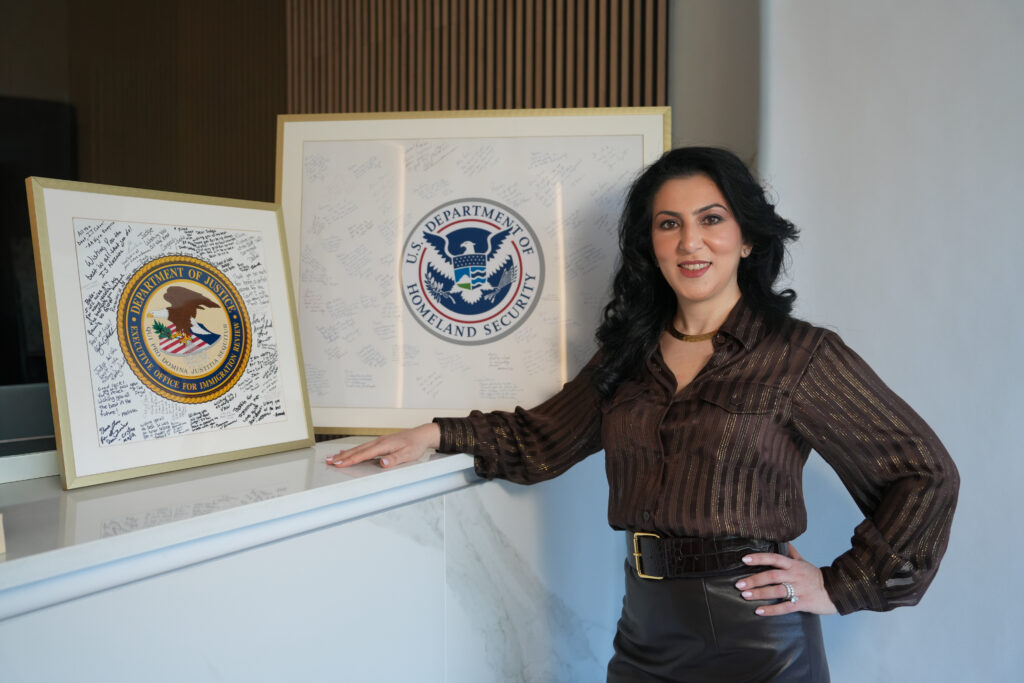
If you are searching for a New York Motion to Reopen or Removal Defense Appeals lawyer near you, contact Cohen Immigration Law Group, P.C. for a consultation. Raisa Cohen is an experienced U.S. Immigration Judge and former ICE prosecutor who is committed to helping you get through this troubling time. Contact us today for a consultation.